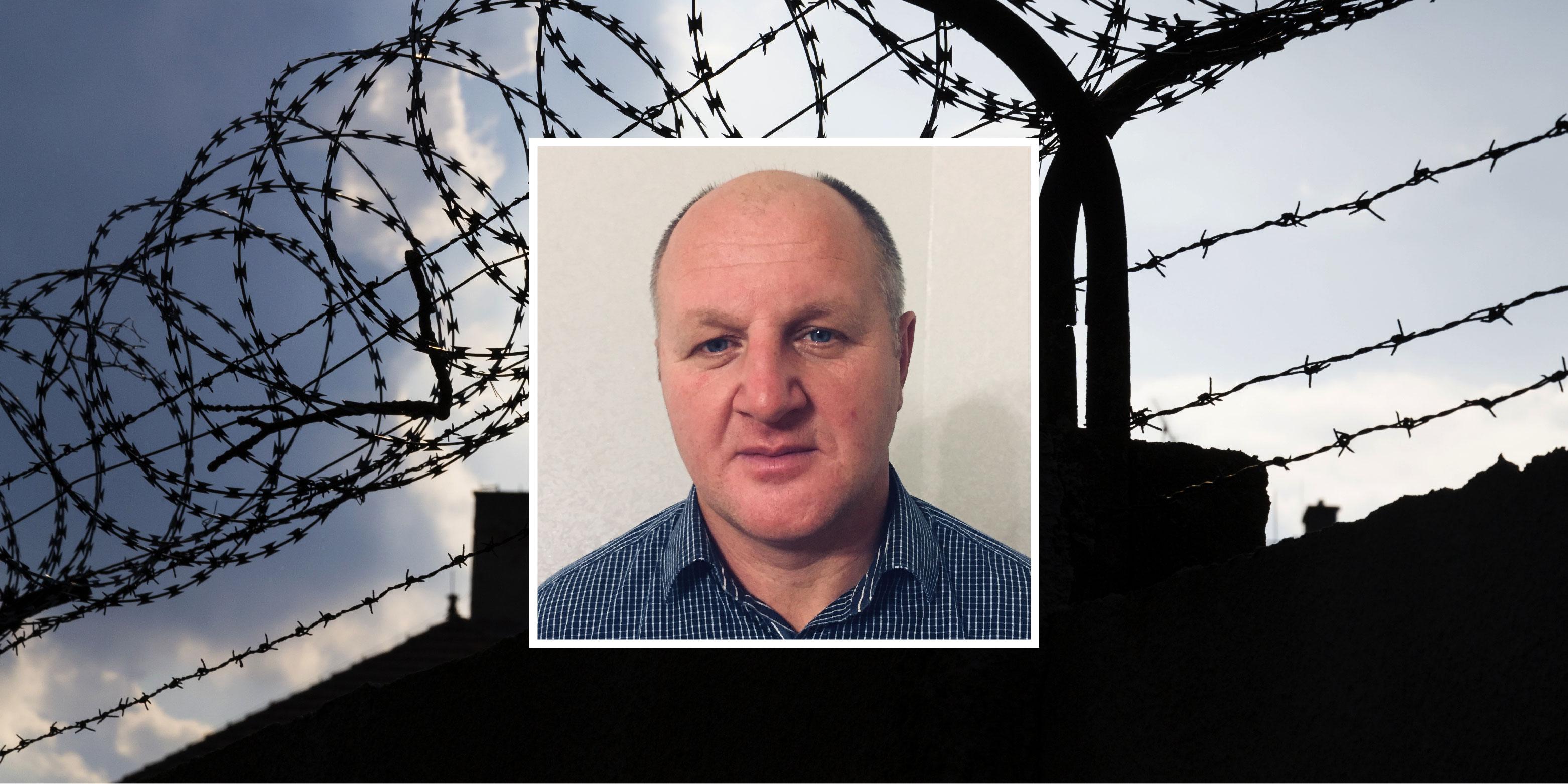
Photo: Sergey Filatov
Photo: Sergey Filatov
Crimea Resident Sergey Filatov Sentenced to Six Years in Prison for Worshipping at Home
CrimeaOn March 5, 2020, the judge of the Dzhankoysky District Court, Maria Ermakova, sentenced Sergey Filatov to six years in a general regime colony for alleged extremist activities. The believer was taken into custody in the courtroom. The case is rife with falsifications, the verdict will be appealed.
According to the state prosecution, the believer "undermines the foundations of the constitutional order and security of the state." At the same time, all that is imputed to him is reading the Bible together with family and friends in his own home. To gather enough evidence of such a "crime," the security forces organized a covert audio recording of believers discussing Bible verses and singing Christian hymns.
In her verdict, Judge Ermakova ignored the fact that Sergey Filatov has no criminal record, has positive characteristics, and two of the four children are minors. Senior Assistant Prosecutor Aleksandr Onischuk insisted that "Jehovah's Witnesses are banned on the territory of the Russian Federation," despite the position of the Russian Government and the Supreme Court, repeatedly voiced by the defense, that the religion of Jehovah's Witnesses is not prohibited in Russia, and its legality has never been challenged in court.
Filatov's case is rife with falsifications. So, on the date indicated by the investigation (10.10.2017), when a service was allegedly held at Filatov's home, in reality there was no worship, which is proved by the details of telephone conversations. The investigation illegally changed the evidence in the case; copies were used instead of original evidence; the experts in the case did not provide their diplomas, as required by law; One of the prosecution witnesses gave false testimony, which was established by the testimony of other witnesses.
At the same time, the court did not satisfy a single request of the defense to verify evidence or request additional information. The investigation practically did not touch on issues directly related to the subject of proof - Filatov's management of the banned organization "Sivash". Instead, the religious views of an indefinite circle of people (Jehovah's Witnesses) were discussed, and the prosecutor used the term "banned sect."
Sergey Filatov's conviction was made possible by the fact that on April 20, 2017, the Supreme Court liquidated all 22 local religious organizations of Jehovah's Witnesses in Crimea , just two years after their formation. In less than two years of their existence, these organizations have not received a single fine or warning. But then all of them were recognized as "extremist" at the same time.
"It is sad that the mass repressions for the faith unleashed by law enforcers in dozens of regions of Russia have reached Crimea," commented Yaroslav Sivulsky, a representative of the European Association of Jehovah's Witnesses. - Sergey Filatov was convicted under a serious criminal article as a dangerous state criminal for ordinary family worship. The case is sewn with white threads, the investigation did not try to hide its falsifications in the case, and the court clearly sympathized with the prosecution. This is a mockery of justice, and the verdict will definitely be appealed."
